









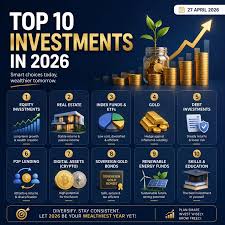
The financial landscape of 2026 is defined by a shift from the «growth at all costs» mentality of the early decade to a more selective, disciplined approach. As we move through the remainder of the year, the «smart money»—institutional investors, hedge funds, and seasoned portfolio managers—is prioritizing stability, capital efficiency, and thematic resilience over speculative momentum.
If you are looking to optimize your portfolio for the second half of 2026, the strategy is clear: focus on quality, embrace geographic diversification, and remain agile in the face of persistent volatility. Here is a deep dive into where the smart money is currently allocating capital.
1. The AI Buildout: Beyond the «Picks and Shovels»
While the AI frenzy of 2024 and 2025 captured the public imagination, 2026 is the year of the AI reality check. The smart money is no longer indiscriminately buying any company with an «AI» label. Instead, the focus has shifted toward companies that are successfully monetizing their models and the infrastructure that supports the next phase of development.
- Infrastructure & Data Centers: The physical foundation of AI—data centers, high-speed memory, and power generation—remains a core priority. As AI models become more complex, the demand for power-efficient hardware and specialized cooling solutions is skyrocketing.
- Monetization Leaders: Investors are scrutinizing software companies. The winners are those that have successfully integrated AI into their workflows to demonstrably increase revenue or decrease operating costs.
- Gaming & Creative AI: A specific, often overlooked niche is AI-enhanced content creation, particularly in gaming. Using AI to reduce the development cycle for high-end games is creating significant margin expansion for leaders in the entertainment sector.
2. A «Barbell Strategy» for Fixed Income
With interest rate environments remaining complex, the traditional «60/40» portfolio is getting a facelift. Professional investors are increasingly adopting a barbell strategy to balance income and risk.
On one side of the barbell, you have short-term, high-quality bonds that provide liquidity and safety. On the other side, savvy investors are rotating into selective credit opportunities, such as senior loans and collateralized loan obligations (CLOs), which offer attractive yields that currently outpace inflation.
Note: The key for the remainder of 2026 is to avoid «duration risk.» Many institutional managers are keeping their bond portfolios relatively neutral in duration, focusing instead on capturing credit spreads rather than betting on significant shifts in the yield curve.
3. The Rebirth of Value and Cyclicals
As the global economy enters a period of synchronized, if moderate, growth, investors are finding value in sectors that were sidelined during the tech boom.
- Financials & IT Services: Large-cap banks and capital-efficient IT service firms are increasingly attractive. These companies are better positioned to absorb economic shocks and maintain dividend payments, even if growth moderates.
- Infrastructure & Utilities: The «defensive» play for 2026 involves electric utilities. Many are trading at discounts, offering a compelling blend of stable dividends and accelerating earnings growth as they facilitate the energy requirements of a digitized economy.
4. Geographic Diversification as Risk Management
For years, the U.S. market has been the primary driver of global returns. However, in 2026, the smart money is treating international diversification as a non-negotiable risk-management tool.
- Emerging Markets: As the U.S. dollar shows signs of softening due to diverging central bank policies, emerging market corporates and select indices are becoming compelling. Low inflation in key emerging economies makes them a viable hedge against potential stagnation in developed markets.
- Global Housing: From a real estate perspective, housing markets in stable, developed nations are seen as a long-term tailwind. The demand for basic housing needs remains robust, providing a «bond-like» quality to real estate portfolios that is hard to find elsewhere.
5. Private Credit: The New Frontier
Perhaps the most significant shift in institutional portfolios over the last 18 months has been the rise of private credit. By lending directly to businesses, investors are bypassing the volatility of public stock and bond markets.
In 2026, private credit is being used as a yield-enhancer. With stable economic growth and lower borrowing costs in certain regions, direct lending provides a layer of diversification that is shielded from the daily «noise» of the stock market ticker.
6. Navigating Volatility: The «Disciplined» Mindset
Volatility in 2026 is not an anomaly; it is the «new normal.» Geopolitical tensions, energy shocks, and the rapid pace of central bank policy updates mean that market swings are sharper and more frequent than in years past.
The smart money handles this not by retreating, but by:
- Strict Risk Management: Limiting position sizing and adhering to disciplined exit strategies.
- Avoiding «Lazy» Decisions: In a year that punishes herd mentality, successful investors are rebalancing their portfolios proactively rather than reactively.
- Staying Invested: The most dangerous move in 2026 is attempting to time the market. The smart money focuses on maintaining consistent exposure to high-quality assets while keeping a «war chest» of cash for opportunistic entries when volatility creates temporary mispricing.
Summary Table: Smart Money Allocation Targets
| Asset Class | Strategy | Why? |
| U.S. Tech/AI | Selective/Quality | Focused on monetization vs. speculation. |
| Fixed Income | Barbell Approach | Combines liquidity with attractive credit yields. |
| Real Estate | Specific Sectors | Favoring data centers and senior housing. |
| Emerging Markets | Tactical Exposure | Benefit from a weaker USD and local growth. |
| Private Credit | Portfolio Diversification | Provides steady income outside of public markets. |
Final Thoughts: The Path Forward
If there is one lesson to take away from the first half of 2026, it is that complexity demands simplicity in execution. The best investors are not looking for the next «moonshot» to double their money overnight. Instead, they are positioning themselves in companies with strong balance sheets, high barriers to entry, and the ability to adapt to a digital and climate-conscious global economy.
As you plan your investments for the remainder of the year, ask yourself if your portfolio is built for the «fastest horse» or for the horse that can «finish the race.» In 2026, winning isn’t about being the boldest; it’s about being the most resilient.
Disclaimer: This article is for informational purposes only and does not constitute financial advice. Always consult with a certified financial planner before making significant investment decisions.
Did you find this investment outlook helpful? To stay ahead of the curve, subscribe to our weekly newsletter where we break down the latest market data and provide actionable strategies for every stage of your financial journey.