








As we cross the midpoint of 2026, the financial landscape is no longer defined by the unchecked optimism of the early decade. Instead, we have entered a phase of «disciplined expansion.» For the modern investor, this shift presents a unique challenge: how to capture the tailwinds of technological transformation while building a defensive shell against ongoing geopolitical friction and economic volatility.
If you are looking to position your capital for the future, you must look beyond the surface-level noise of daily market fluctuations. The «smart money» in 2026 is moving toward assets that offer structural resilience—companies and sectors that are fundamentally necessary for a world experiencing a digital-industrial pivot.
The 2026 Macro-Theme: «Structural Resilience»
To understand where to invest, you must first understand the macro forces at play. In 2026, three pillars are shaping global capital flows:
- Energy-AI Convergence: Artificial Intelligence is no longer just a software play; it is an infrastructure-heavy, power-hungry machine. The most critical constraint for the next stage of the tech cycle is energy.
- Global Fragmentation: We are living through the end of seamless globalization. Capital is flowing away from purely «efficient» supply chains toward «resilient» ones, favoring domestic security and regional stability.
- The Income Renaissance: After years of zero-interest-rate policies, the return of positive real yields has made fixed income a legitimate, non-speculative pillar of portfolio construction again.
Where to Allocate Your Capital
1. The Energy-Infrastructure Nexus
If the AI boom of 2024–2025 was the «software» phase, 2026 is the «hardware and energy» phase. Data centers are consuming electricity at an unprecedented scale, making energy providers and grid infrastructure providers the «picks and shovels» of the mid-decade.
- Grid Modernization: Companies involved in HVDC (High Voltage Direct Current) transmission, smart grid management, and long-duration battery storage are critical bottlenecks. Investors are increasingly looking at utilities that can guarantee high-availability power to data centers.
- Energy Management AI: Software that optimizes energy usage—whether for industrial fleets or massive data centers—is becoming a high-margin sector, as efficiency is now synonymous with profitability.
2. Selective Equity: Moving Beyond the «Magnificent» Few
Many retail investors are still over-concentrated in the same handful of tech stocks that dominated the last few years. The professional outlook for the remainder of 2026 suggests a «mean reversion» toward quality value stocks.
- The «Value» Opportunity: Sectors like financials and industrials are trading at attractive valuations compared to the tech-heavy indices. As interest rates settle into a «new normal,» banks with strong balance sheets and industrial firms benefiting from localized manufacturing policies are poised to capture a larger share of growth.
- Emerging Resilience: Select emerging markets are finally seeing a recovery. Countries with favorable demographic trends and those positioning themselves as «neutral» in the global fragmenting economy are attracting institutional flows that were previously trapped in U.S.-only mandates.
3. Fixed Income: The «Belly» of the Curve
The traditional 60/40 portfolio is back, but it looks different. Rather than just buying long-term bonds, smart investors are focusing on the «belly» of the yield curve—the 2- to 5-year range.
- Why this range? It offers a balance between income and duration risk. As central banks manage the trade-off between inflation and economic «sturdiness,» this middle ground provides the highest level of income-per-unit-of-risk.
- Credit Opportunities: With the high-yield credit market maturing, private credit and senior loans have become mainstream tools for portfolio diversification, offering returns that provide a buffer against stock market volatility.
4. Real Assets as Inflation Hedges
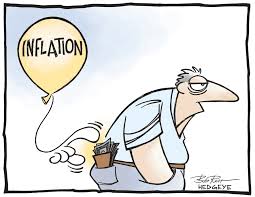
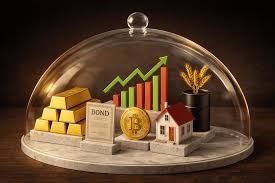
Gold and commodities have transcended their role as «doomsday hedges.» In 2026, they are viewed as strategic components of a portfolio meant to protect against the debasement of currencies and the volatility of trade tariffs.
- Gold and Hard Assets: With central banks globally increasing their gold reserves, the retail investor’s allocation to gold (or gold-backed assets) is a proven way to hedge against geopolitical risk.
- Real Estate (Selective): Not all real estate is created equal. Commercial office space remains challenged, but «industrial» real estate—warehousing, data centers, and cold-storage facilities—is booming due to the ongoing need for supply chain localization.
The Strategic Mindset for the Rest of 2026
If you want to invest like the smart money in 2026, you must adopt these three principles:
1. Stop Trying to Time the «Top»
The markets in 2026 are prone to sharp, sudden drawdowns followed by rapid recoveries. Trying to exit and re-enter is a losing game. Instead, Dollar-Cost Averaging (DCA) remains the most effective strategy. By investing a fixed amount at regular intervals, you remove the emotional burden of guessing which direction the market will move tomorrow.
2. Look for «Monetizable» Tech
Avoid the «AI hype» stocks that have no path to profitability. The winners in the second half of 2026 will be the companies that can show a clear correlation between AI investment and margin expansion. If a company is spending billions on AI but not seeing a corresponding rise in productivity or a drop in operating costs, be wary.
3. Diversification Means More Than Just Tickers
True diversification isn’t just owning 50 different tech stocks. It means owning assets that react differently to the same economic news. By holding a mix of stocks, bonds, hard assets, and perhaps a small allocation to private credit, you ensure that no single geopolitical event or interest rate shift can derail your long-term wealth.
Summary Strategy Table: 2026 Portfolio Tilt
| Asset Class | Strategy | Strategic Objective |
| Equities | Selective/Value Tilt | Capture mean reversion in under-valued sectors. |
| Fixed Income | 2–5 Year Maturity | Lock in yields; provide «ballast» for the portfolio. |
| Real Assets | Gold/Hard Assets | Hedge against currency debasement & global friction. |
| Infrastructure | Grid/Data Center Power | Benefit from the energy-AI «bottleneck.» |
| Cash | Minimal/Strategic | Only keep enough for immediate liquidity/opportunities. |
Final Outlook
The rest of 2026 will be defined by the transition from speculation to execution. The companies and assets that prove they can operate profitably in a world of higher energy costs, fragmented trade, and AI integration will be the winners of this cycle.
As an investor, your goal is not to be right every single day, but to be positioned correctly for the next decade. Build a portfolio that doesn’t just survive the volatility, but uses it to its advantage. Keep your costs low, stay diversified across geography and asset class, and—most importantly—keep your eyes on the horizon. The future is being built today; make sure your capital is part of the foundation.