







The most common misconception about wealth building is that you need a fortune to start. In reality, the most important component of long-term financial success isn’t the size of your initial deposit—it is the discipline to begin and the strategy to sustain growth. Having $1,000 in your pocket today puts you in an elite category: you are no longer just dreaming about financial freedom; you are actively funding it.
In the mid-2026 economic environment, where interest rates remain a pivotal factor and market volatility is the new baseline, your $1,000 is a powerful seed. Whether you are a college student, a young professional, or simply someone looking to finally get your feet wet in the markets, here is the professional blueprint for how to deploy that capital effectively, safely, and aggressively.
The Pre-Investment Checklist: Before You Hit «Buy»
Before you even think about tickers or market trends, you must ensure your financial foundation is solid. Investing $1,000 while you have high-interest debt or zero savings is not investing—it is gambling with your stability.
- The Emergency Fund Baseline: If you don’t have at least $500 in a high-yield savings account (HYSA), park half of your $1,000 there first. This acts as your «insurance policy» against life’s inevitable surprises.
- The Debt Audit: Are you carrying credit card balances with double-digit APRs? If so, paying off that debt is effectively an instant, guaranteed return on investment. If you have a credit card at 22% APR, paying it off is mathematically superior to any stock market gain you could realistically expect in the short term.
- Liquidity Reality Check: Do you need this money for rent, tuition, or a car payment in the next 12 months? If so, do not put it in the stock market. Keep it in a liquid, FDIC-insured vehicle.
If you have your debt under control and a basic emergency cushion, you are ready to put your $1,000 to work.
The Strategic Allocation Plan: A $1,000 Roadmap
If I were to allocate $1,000 today with a long-term mindset (5–10+ years), I would prioritize diversification and tax efficiency. Here is the exact split:
1. The Core Pillar: $500 in a Low-Cost S&P 500 ETF
The «Smart Money» rarely beats the market by picking individual stocks; they beat the market by owning the market. An S&P 500 ETF (Exchange Traded Fund) gives you instant exposure to the 500 largest, most influential companies in the United States.
- Why: You are buying a cross-section of the American economy. When tech giants grow, you win. When consumer goods companies stabilize, you win.
- Action: Look for ETFs with expense ratios below 0.05%. Your goal here is to keep costs low so your compounding interest remains high.
2. The Tax-Advantaged Growth: $300 in a Roth IRA
If you have earned income, a Roth IRA is arguably the greatest gift to the retail investor. By contributing to a Roth IRA, you are paying taxes on the money now so that the growth—and the eventual withdrawals in retirement—are 100% tax-free.
- The Power of Time: Even $300 placed in a Roth IRA today can grow exponentially over the next 20 to 30 years due to the tax-free nature of the account. It is the ultimate «set it and forget it» vehicle.
3. The «Resilience» Bucket: $200 in a High-Yield Savings Account (HYSA)
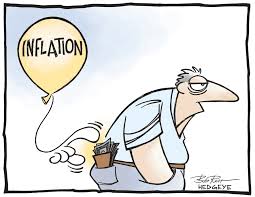
In 2026, interest rates continue to provide a rare opportunity for savers. A HYSA is not just «losing to inflation»; it is an essential piece of your risk management strategy.
- The Psychological Edge: Having $200 in a liquid savings account gives you a «dry powder» reserve. If the stock market hits a temporary rough patch and you see a high-quality asset go «on sale,» you have the cash ready to move into the market without having to liquidate your long-term holdings.
Why This Strategy Works in 2026
The year 2026 is defined by a «wait-and-see» approach from major institutions. Investors are moving away from speculative assets and toward «quality.» By using the split above, you are essentially mimicking the behaviors of institutional endowment funds, albeit on a micro-scale.
Minimizing Concentration Risk
The biggest danger for small portfolios is «concentration risk»—putting all your eggs in one basket (e.g., one volatile crypto coin or one hyped AI startup). By using an ETF for the bulk of your investment, you immediately diversify across industries, sectors, and management teams. You aren’t betting on one winner; you are betting on the collective success of the economy.
Embracing Dollar-Cost Averaging (DCA)
Once you invest your $1,000, don’t stop. The most successful investors in the world aren’t the ones who timed the market perfectly; they are the ones who contributed consistently. Even if you can only add $50 or $100 per month after this initial $1,000, that consistent action is what builds true wealth. You will be buying shares when prices are high, and more importantly, buying more shares when prices are low.
Common Pitfalls to Avoid
If you are new to investing, the internet is full of «gurus» and «get-rich-quick» schemes. Here is what you should avoid at all costs with your $1,000:
- The «Lottery Ticket» Mindset: Penny stocks, meme coins, and «next big thing» hype cycles are designed to drain your account. Your $1,000 is for building, not for gambling.
- Frequent Trading: Every time you sell a stock, you may trigger tax events or transaction fees. For a small account, these costs eat away at your principal. Keep your turnover low.
- Analysis Paralysis: Waiting for the «perfect» time to enter the market is a fool’s errand. The best time to start is when you have the capital. The second best time is today.
The Long-Term Perspective
Let’s talk about the math of success. If you invest $1,000 and add just $200 a month to a diversified index fund earning an average annual return of 8% (a historically conservative estimate for the S&P 500), after 20 years, your total contributions of $49,000 could grow to over $118,000.
That is the «magic» of compounding. It starts with that first $1,000, but it is sustained by your patience and your ability to ignore the daily headlines.
The financial world in 2026 is complex, but your strategy doesn’t need to be. By focusing on low-cost indices, utilizing tax-advantaged accounts, and maintaining a liquid safety net, you are building a fortress of financial security.
You have the roadmap. You have the capital. Now, take the first step. Open that brokerage account, make your first deposit, and stop dreaming about «smart money»—start becoming it.
Key Takeaways for the 2026 Investor:
- Prioritize Tax Efficiency: Always exhaust your tax-advantaged accounts (like a Roth IRA) before moving to a standard taxable brokerage account.
- Fees are the Enemy: In an era where many brokerages have dropped commissions to zero, high management fees are the silent killer of wealth. Stick to low-cost ETFs.
- Stay the Course: The markets will fluctuate. The news cycle will be negative. The «smart money» stays invested during the noise because they understand that wealth is built in years, not in weeks.