









The Death of the 60/40 Portfolio: Modern Asset Allocation for Inflationary Eras
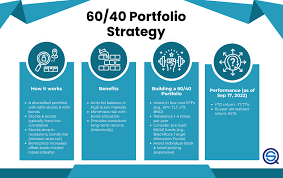
For over four decades, the «60/40» portfolio—an allocation of 60% equities and 40% high-quality government bonds—was the undisputed «gold standard» of investment strategy. It was a model of simplicity and elegance, promising a comfortable balance between the growth potential of stocks and the defensive income of bonds. During the era of the «Great Moderation,» when inflation remained low and central banks had the room to cut interest rates during crises, this structure worked perfectly. When stocks fell, bonds usually rallied, providing a reliable hedge.
However, as we stand in 2026, the 60/40 portfolio is not just struggling; it is effectively obsolete. We have entered a new macroeconomic regime defined by structural inflation, geopolitical fragmentation, and the end of the era of «easy money.» In this environment, the traditional bond component of the portfolio no longer acts as a shock absorber; instead, it often moves in lockstep with stocks, leaving investors exposed during market drawdowns. The death of the 60/40 portfolio is a reality that demands a total reimagining of asset allocation for the modern, inflationary era.
1. The Breakdown of the Correlation Hedge
The efficacy of the 60/40 portfolio relied on the negative correlation between stocks and bonds. Historically, when equity markets experienced a «risk-off» event, investors fled to the safety of government bonds, driving their prices up and yields down. This provided a natural cushion.
In an inflationary regime, this relationship flips. Inflation is the common enemy of both stocks and bonds. When inflation expectations rise, bond yields must climb to compensate, which forces bond prices to fall. Simultaneously, higher interest rates hurt corporate valuations and compress price-to-earnings ratios, dragging down equity prices.
Consequently, we have entered a period of positive correlation, where both components of the traditional portfolio decline simultaneously. In 2026, the 40% bond allocation provides neither the income necessary to outpace inflation nor the defensive hedge required to protect capital during volatility. Relying on this structure is no longer a conservative strategy; it is a recipe for real-terms capital erosion.
2. Defining the «Inflationary Era»
To allocate capital successfully in 2026, one must first recognize the structural differences between our current economy and the low-inflation decades that preceded it:
- Supply Chain Regionalization: The era of hyper-efficient, just-in-time global supply chains is over. Today, «just-in-case» resilience, near-shoring, and industrial localization take precedence, all of which are inherently more expensive and inflationary.
- Energy Transition Costs: The massive capital expenditure required to transition global energy grids toward renewables is a multi-decade inflationary force. We are effectively rebuilding the global economy from the ground up, an endeavor that demands vast resources and labor.
- Structural Labor Shortages: With aging demographics in the developed world and a declining global workforce, the bargaining power of labor has shifted, contributing to «wage-push» inflation that is proving sticky and difficult for central banks to contain.
In this context, cash in a savings account is a guaranteed loss of purchasing power. The challenge for the modern allocator is to build a portfolio that thrives on real growth, not nominal value.
3. The New Pillars of Asset Allocation
If the 60/40 portfolio is dead, what replaces it? The modern allocator must adopt a «Multi-Asset» framework that focuses on assets with intrinsic value and those that can pass on price increases to the end consumer.
A. The «Hard Asset» Anchor (20–30% Allocation)
In inflationary periods, financial assets (stocks/bonds) tend to struggle, while «hard assets»—commodities, physical real estate, and precious metals—tend to outperform.
- Gold and Monetary Metals: These remain the ultimate hedge against sovereign currency debasement. They provide a «neutral» store of value that sits outside the reach of central bank balance sheets.
- Productive Commodities: Exposure to industrial metals (copper, nickel) and energy (uranium, oil) provides a direct hedge against the inflationary costs of industrialization and energy transition.
B. Quality Equities with «Pricing Power» (40% Allocation)
Not all stocks are created equal in an inflationary environment. Avoid companies with high debt loads and those that rely on thin margins and high-volume, commoditized sales.
- The Power of Moats: Focus on firms with deep economic moats—those that can increase prices without losing customers. This includes companies in essential services, cybersecurity, and software infrastructure, where the product is so integral that price increases are absorbed as a «cost of doing business.»
C. Private Markets and Alternatives (15–20% Allocation)
Private credit, infrastructure projects, and tokenized real-world assets (RWAs) offer returns that are often uncorrelated with the broader stock market.
- Private Credit: With banks tightening their lending criteria, private debt has become a lucrative source of yield. Lending directly to businesses, often at floating rates, allows investors to earn higher returns that reset as interest rates rise.
- Real Estate (Tokenized/Direct): Commercial real estate is a classic inflation hedge because rents can be adjusted upward as inflation rises. Tokenization has made these assets more accessible to the retail investor, allowing for granular diversification that wasn’t possible a decade ago.
D. Liquidity and Defensive Optionality (10–15% Allocation)
In a world of volatility, cash is a tactical tool, not a storage solution.
- Maintain a «war chest» of liquid assets—not for saving, but for opportunity. In a multipolar world where «black swan» events occur with higher frequency, liquidity allows the modern allocator to capture distressed prices during market panics.
4. The Psychology of the Modern Allocator
Transitioning away from the 60/40 model is as much a psychological challenge as a financial one. Investors are conditioned to believe that «diversification» means owning more stocks and more bonds.
The modern allocator must practice «Cognitive Decoupling»:
- Stop «Bond-Thinking»: Stop treating fixed-income as a safe haven. Treat it as a return-generating asset class that must earn its keep, just like an equity. If it doesn’t yield significantly above the rate of inflation, it doesn’t belong in a long-term portfolio.
- Embrace Volatility as Opportunity: In the 60/40 era, volatility was seen as a failure of the portfolio. In the 2026 era, volatility is a feature of a changing global order. A modern portfolio is designed to be resilient to volatility, not immune to it.
- Active Monitoring vs. Passive Hoarding: The «set it and forget it» mentality of the 60/40 era is dead. Today’s macro environment requires quarterly «Geopolitical Audits» to ensure your asset allocation aligns with current inflationary trends and supply-chain realities.
5. Conclusion: Evolution or Extinction
The demise of the 60/40 portfolio is a necessary evolution. It forces investors to move beyond the simplistic binary of stocks vs. bonds and into the more complex, rewarding, and truthful world of global assets.
In this new era, the goal is not to chase nominal returns, but to achieve real purchasing power growth. This requires a portfolio that is geographically diversified, tactically tilted toward hard assets, and protected by instruments that actually hedge against systemic inflationary pressure.
The «death» of the 60/40 model is only a catastrophe for those who refuse to adapt. For the modern allocator, it is an invitation to build a truly robust financial structure. The investors of 2026 who survive and thrive will be those who stop clinging to the comfortable illusions of the past and start building portfolios that reflect the messy, fragmented, and high-inflationary reality of the world as it actually exists today.
Disclaimer: This analysis is for educational purposes and reflects economic trends as of mid-2026. Investment involves significant risk. The shift away from traditional portfolios requires a clear understanding of personal risk tolerance and liquidity needs. Consult with a qualified financial advisor before implementing major changes to your asset allocation.