







Target Keywords for SEO & High CPM
Primary High CPM Keywords (Finance, Wealth Management & Macroeconomics):
- Inflation hedging strategies 2026
- Compound interest wealth calculator
- Why cash is losing value
- Real rate of return calculation
- Long-term investment portfolio growth
- Defeating inflation through investing
Core SEO Keywords:
- Why saving is losing
- Urgency of investing
- Saving vs investing
- Financial independence 2026
- How to beat inflation
Long-Tail SEO Keywords:
- Why a high-yield savings account is not enough
- The impact of inflation on cash savings
- Investing for beginners in the modern economy
- The psychological cost of not investing
Why Saving is Losing: The Absolute Urgency of Investing in the Modern Economy
Introduction: The «Safe» Trap
For generations, the conventional wisdom handed down by our parents was simple: «Work hard, save your money in the bank, and you’ll be secure.» For the mid-20th century, this was sound advice. However, in the economic landscape of 2026, this philosophy has become a silent wealth-destroyer.
While saving money is a necessary first step for building an emergency fund, treating a savings account as an «investment strategy» is a catastrophic error. We are currently living in an era defined by structural inflation, rapid technological disruption, and a complete reimagining of global value. If your money is sitting idle in a traditional savings account, it is not «safe»—it is actively losing purchasing power every single day.
Understanding why saving is losing is the first step toward financial liberation. To thrive, you must shift your mindset from «preserving cash» to «deploying capital.»
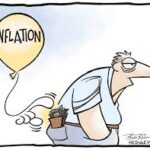
1. The Invisible Thief: Why Inflation is a Silent Tax
The primary reason saving is losing is the erosion of purchasing power. Even in a low-inflation environment, the target inflation rate—typically around 2%—is designed to decrease the value of cash over time.
When you leave money in a standard bank account, you are effectively paying a «tax» on your own savings. If your bank pays you 0.5% interest, but the real-world cost of living (inflation) is rising at 3% or 4%, you are losing money in real terms. Over a 10-year or 20-year horizon, this «math of loss» is devastating. A sum of money that could buy a house today will likely only afford a fraction of that property in two decades. Saving money is not about «waiting for the right time»; it is a guaranteed strategy for poverty in an inflationary world.
2. The Magic of Compounding vs. The Stagnation of Cash
Albert Einstein famously called compound interest the «eighth wonder of the world.» Conversely, cash stagnation is the eighth destroyer of wealth.
Investing is the process of putting your money to work so that it generates its own returns, which are then reinvested to generate further returns. This creates an exponential growth curve. When you save, you are working for money. When you invest, your money works for you.
- The Saving Path: Linear, slow, and eroded by inflation.
- The Investment Path: Exponential, aggressive, and designed to outpace economic decay.
If you invest $1,000 in a broad market index fund with an average historic return of 7%–8%, your money effectively doubles every decade. If you leave that same $1,000 under a mattress or in a zero-interest savings account, it remains $1,000—but its ability to buy goods and services will have plummeted by 30% to 50% over that same timeframe.
3. The Opportunity Cost of Inaction
The urgency of investing isn’t just about what you lose to inflation; it’s about what you fail to gain in capital appreciation.
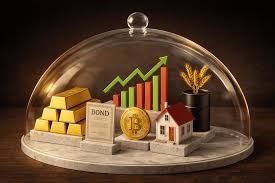
In the modern economy, wealth is not created by hoarding cash; it is created by owning productive assets. Whether it is stocks, real estate, or business equity, productive assets grow alongside the economy. When you choose not to invest, you are essentially betting against the collective growth of global human ingenuity.
Every day you spend «waiting for a crash» or «waiting for the perfect time» is a day you miss out on dividends, capital gains, and the compounding force of the market. The cost of inaction is, quite literally, the future lifestyle you are failing to build.
4. The False Security of Cash
Many people avoid investing because they fear the volatility of the stock market. They view a savings account balance that never changes as «safe.»
This is a profound cognitive bias. Volatility (short-term price fluctuation) is not the same thing as risk (the permanent loss of capital). In the short term, stocks go up and down. But in the long term, they have historically been the most effective tool for wealth creation ever invented.
The true risk is not the market going down temporarily; the true risk is the permanent, irreversible loss of your capital’s purchasing power due to inflation and the loss of your time—your most valuable asset—by not putting your money into play.
5. How to Escape the «Saving Trap» in 2026
Escaping the trap does not mean being reckless. It means transitioning from a saver to an investor through a structured, disciplined process:
- Define Your Emergency Fund: Yes, keep 3–6 months of living expenses in a High-Yield Savings Account (HYSA). This is for security. Once that is funded, stop saving excess cash.
- Automate Your Deployment: Use apps like Wealthfront or Trade Republic to set up recurring investments. Automating the process removes the emotional struggle of trying to «time» the market.
- Buy Assets, Not Stocks: Don’t just gamble on the latest trending ticker symbol. Build a «Core Portfolio» of broad-market index funds or ETFs that own the entire global economy.
- Increase Your Financial Literacy: Learn how to read balance sheets, understand the difference between an asset and a liability, and master the tax-advantaged accounts (like IRAs or private pensions) available in your country.
Conclusion: The Urgency is Now
In the modern economy, cash is for transactions, not for storage. Keeping your life savings in a checking account is a financial death sentence for your future purchasing power.
The urgency of investing is absolute. It is the bridge between working for your living and having your capital provide the life you deserve. The market rewards those who act with long-term discipline and punishes those who sit on the sidelines waiting for a «safe» harbor that, in an inflationary world, does not exist.
Stop saving for security. Start investing for freedom.